
Portable sauna options are defined by heat source types and steam production capacities rather than marketing terms like “spa-grade” or “luxury.” You need to identify the specific heating element and steam output to determine if a unit can reach your desired temperature within a reasonable timeframe. Measure your available floor space and your required maximum temperature to find a model that fits your environment.
If you are focusing on recovery, see the best infrared sauna for muscle tension.
New users should look at the best portable sauna for beginners.
Heating Capacity and Maximum Temperature of Portable Saunas
- Heating Capacity – This measures the volume of water the heating element can heat, with 17 of the 149 listings we screened stating a figure between 2L and 4L. A higher heating capacity generally allows for faster heat generation.
- Maximum Temperature – This measures the highest thermal level the unit can reach, with 37 of the 149 listings stating a range from 60°F to 194°F. You should choose a maximum temperature that exceeds your personal comfort limit to ensure the unit can maintain a steady heat.
- Steam Output – This measures the volume of water converted to vapor per unit of time, with 12 of the 149 listings stating a range from 2.6L to 4L. Higher steam output results in a denser, more humid environment in shorter periods.
- Heating Element – This determines the type of heat (carbon fiber, ceramic, or metal) and its durability. Carbon fiber is a common material used to distribute heat evenly across the surface of the unit.
- Steam Generator – This determines the output capacity and humidity levels of the sauna. A larger generator allows for sustained steam production without the unit running dry.
- Steam vs. Dry Heat – This dictates whether the user experiences high humidity (steam tent) or radiant heat (blanket/box). Steam provides a moist environment, while dry heat relies on infrared or convection to warm the body.
Where these choices show up in our reviews
Each of the 3 shown here has its own full review on this site; they run from $120.68 to $219.98.
For a more compact experience, explore the best infrared sauna blanket for relaxation.
Couples can find a shared experience by viewing the best 2 person portable steam sauna.
To understand the cleansing process, learn about the best portable sauna for home detox.
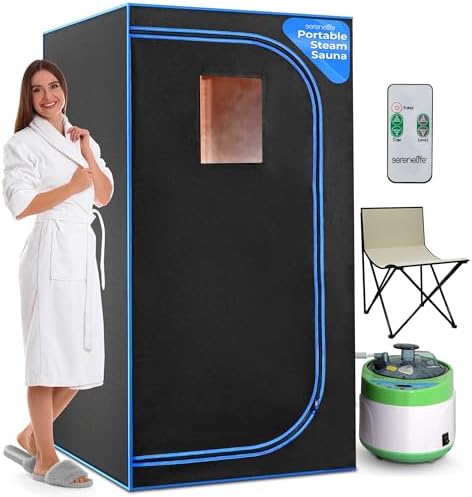
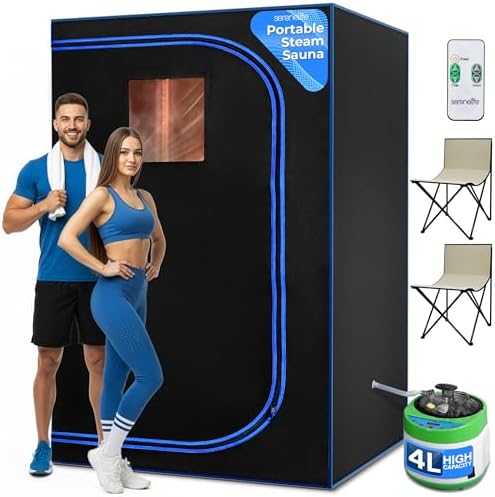

Physical Design and Construction
- Insulation Layer – This affects heat retention and the speed of temperature rise. A higher layer count, with some listings stating up to 5 layers, helps keep heat inside the sauna and reduces the time needed to reach the target temperature.
- Layer Count – This measures how many fabric layers make up the sauna walls, with 8 of the 149 listings stating a median of 4.5 layers. More layers typically improve heat retention and the thickness of the material.
- Waterproof Rating – This measures the level of water resistance for the exterior fabric. Only 36 of the 149 listings state a rating, so you should check if the material can withstand moisture from steam.
- EMF Shielding – This measures the protection against electromagnetic fields from electrical components. 60 of the 149 listings state this feature, which is relevant for users concerned about proximity to electronic heating elements.
Required Accessories and Compatibility
- Remote Control – This allows for the adjustment of temperature and steam from inside the sauna. 49 of the 149 listings state that a remote is included.
- Steamer – This is the component that produces the steam for the sauna. 9 of the 149 listings state a steamer is included in the package.
- Extension Cord – This provides necessary reach for placement near power outlets. You must ensure the cord length matches the distance from your power source to your intended sauna location.
- Replacement Filter – This ensures clean steam production and extends the life of the steamer. You should check the frequency of filter changes required by the manufacturer to maintain steam purity.
- Essential Oils – These enhance the aromatherapy experience during the session. You can add these to the water reservoir if the steamer’s design allows for it.
- Folding Chair – This provides a place to sit inside the sauna. 9 of the 149 listings state a chair is included.
- Blanket – This provides additional heat coverage for the user. 5 of the 149 listings state a blanket is included.
Commonly Confused Terms
Buyers often confuse Heating Capacity with Steam Output. Heating Capacity measures the volume of water the heating element can process, while Steam Output measures the actual volume of water converted into vapor per minute. A unit might have a large heating capacity but a low steam output, resulting in a warm but dry experience.
Different models utilize different technologies, so learn about the types of portable saunas.
To understand the basic mechanics, see how a portable sauna works.
How Far Infrared and Near Infrared Technologies Differ in Heat Depth
Another common confusion is between Far Infrared (FIR) and Near Infrared (NIR). Far Infrared determines the depth of heat penetration into muscle tissue, whereas Near Infrared provides more surface-level heating. If you want deeper heat, you must look for units specifically utilizing FIR technology.
If these options aren’t right, explore the alternatives to a portable sauna.
Safety is paramount, so review the certifications and safety standards for portable saunas.
Protect your investment by reading the portable sauna warranties to check.
Difference Between Steam and Dry Heat
Steam and Dry Heat refer to the moisture content of the air. A steam sauna uses a steam generator to create high humidity, while a dry heat sauna uses a heating element to create radiant heat. You should choose steam if you prefer a humid environment or dry heat if you prefer a dry, radiant experience.
To understand your options, see the price levels for portable saunas.
For safety and comfort, see the maximum temperature for portable saunas.
You can see the specs by viewing our full X-Vcak Sauna Tent review.
Difference Between Heating Capacity and Steam Output
Heating Capacity and Steam Output are distinct measurements of water usage. Heating Capacity describes the total volume of water the heater can manage at once. Steam Output describes the rate at which that water is turned into vapor. A high Steam Output is necessary for a thick, heavy mist.
For a detailed breakdown, see our full OUTEXER T-50C Sauna review.
Check the technical details in our full OUTEXER T-HS3 Sauna review.
Browse our other portable sauna pages
LEDFacialMask.org is reader-supported: some links on this page are affiliate links, and as an Amazon Associate LEDFacialMask.org earns from qualifying purchases at no extra cost to you. Learn more.